
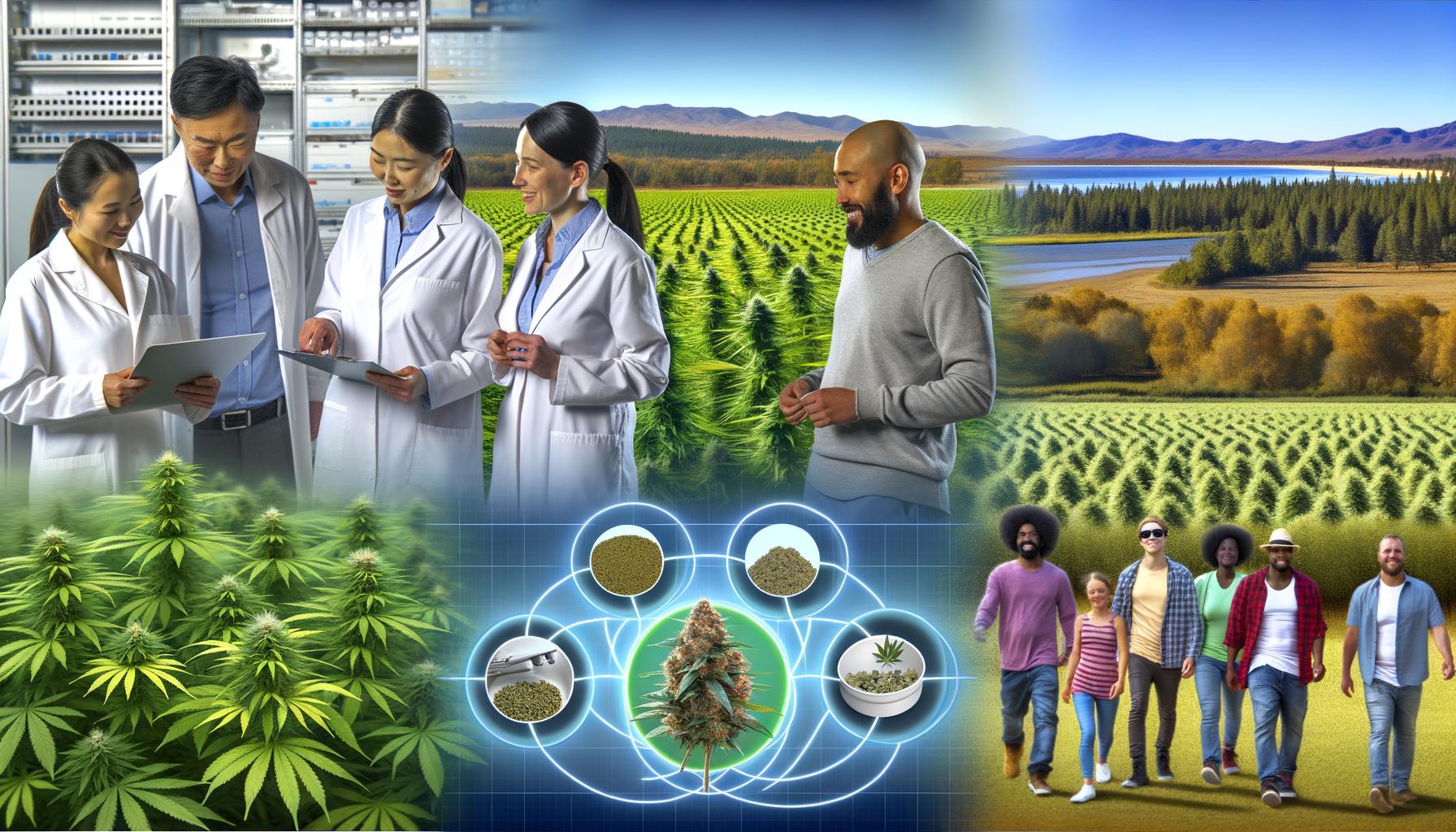
Transforming the Cannabis Landscape: Groundbreaking Scientific Innovations Leading the Industry
Cannabis science and cannabis technology are revolutionizing how the plant is cultivated, processed, and delivered to consumers. The California cannabis industry stands at the forefront of this transformation, leveraging cutting-edge research and innovation to redefine what’s possible in the legal market. From genomic breakthroughs to artificial intelligence-driven cultivation, the sector is experiencing unprecedented growth in scientific rigor and technological sophistication.
Genomic Research and Plant Breeding Advances
Genomic research has fundamentally changed how cannabis cultivators develop new strains and optimize plant characteristics. Scientists are now mapping the complete cannabis genome, identifying genes responsible for cannabinoid production, terpene profiles, and disease resistance. This knowledge enables breeders to create strains with targeted effects, improved yields, and enhanced stability.
California’s leading research institutions and private labs are conducting cutting-edge studies on genetic markers that influence potency, flavor, and medical efficacy. By understanding the genetic foundation of cannabis, scientists can accelerate the development of superior cultivars while maintaining genetic diversity. This approach is far more efficient than traditional breeding methods and reduces the time needed to bring new varieties to market.
The implications for the California cannabis industry are substantial. Breeders can now develop strains that meet specific regulatory requirements, consumer preferences, and therapeutic needs. Genomic tools also help identify and eliminate undesirable genetic traits, creating more consistent and reliable products that consumers can depend on.
Advanced Extraction and Processing Technologies
Extraction technology advances have transformed how cannabinoids and terpenes are isolated from plant material. Modern solvent-based, solventless, and hybrid extraction methods now allow manufacturers to produce cleaner, more potent, and more flavorful concentrates. Supercritical CO2 extraction, hydrocarbon processing, and rosin pressing techniques each offer distinct advantages for different product profiles.
Precision Extraction Methods
State-of-the-art extraction equipment now incorporates real-time monitoring systems that ensure optimal temperature, pressure, and timing throughout the process. These innovations result in higher extraction yields, fewer contaminants, and more consistent final products. California’s strict regulatory framework has driven manufacturers to adopt these technologies to meet rigorous testing and quality standards.
Post-Processing Refinement
Beyond initial extraction, cannabis technology now includes sophisticated purification and refinement techniques. Chromatography, winterization, and distillation processes allow manufacturers to isolate specific cannabinoids and create products with precise cannabinoid ratios. This level of control is enabling the development of more targeted therapeutic products and premium consumer offerings.
Nanotechnology and Enhanced Bioavailability
Nanotechnology in cannabis is emerging as a transformative force in product development and delivery. Researchers are creating nano-emulsions and liposomal formulations that significantly improve the absorption and bioavailability of cannabinoids. These technologies allow for faster onset, better distribution throughout the body, and more consistent dosing experiences.
Nanoparticle research has revealed that reducing cannabinoid particle size can enhance cellular uptake and metabolic efficiency. Products utilizing nanotechnology can achieve therapeutic effects at lower doses, reducing potential side effects while improving efficacy. California laboratories are leading the charge in commercializing these findings into consumer products, beverages, and pharmaceutical formulations.
The regulatory landscape in California has become increasingly sophisticated in addressing nanotechnology applications, ensuring safety and proper labeling. This progressive approach has positioned the state as a hub for advanced cannabis product innovation and given manufacturers a competitive advantage in developing next-generation offerings.
Artificial Intelligence and Precision Cultivation
AI and machine learning in cultivation are optimizing every aspect of cannabis production. Smart growing systems now utilize environmental sensors, computer vision, and predictive algorithms to monitor plant health, adjust lighting and nutrient delivery, and predict yields with remarkable accuracy. These systems significantly reduce resource consumption while maximizing quality and potency.
Data-Driven Growing Strategies
Machine learning models analyze vast amounts of historical cultivation data to identify patterns and optimize growing parameters. Cultivators can now predict the best timing for harvest, anticipate disease outbreaks before they occur, and fine-tune nutrient profiles for specific genetic lineages. This cannabis innovation reduces crop losses and creates more consistent final products.
Automated Quality Control
Artificial intelligence systems are also transforming quality assurance. Computer vision technology inspects plants and finished products for defects, contaminants, and consistency. These automated systems operate at scales and speeds impossible for human inspectors alone, ensuring that only the highest-quality products reach consumers.
Biosynthetic Cannabinoids and Novel Products
Biosynthetic cannabinoids represent a frontier in cannabis innovation, where researchers synthesize cannabinoids through fermentation and bioengineering rather than plant extraction. This approach offers several advantages: consistent potency, reduced cultivation requirements, and the ability to create rare or novel cannabinoids that don’t naturally occur in abundance in cannabis plants.
California’s investment in biotechnology infrastructure and research talent has positioned the state as a global leader in cannabinoid synthesis. Companies are developing fermentation processes that use engineered microorganisms to produce cannabinoids more efficiently and sustainably than traditional cultivation. As regulatory frameworks continue to evolve, these products are opening new market segments and therapeutic possibilities.
The development of biosynthetic cannabinoids also enables cannabis research into rare compounds like CBGA, THCV, and other minor cannabinoids with promising therapeutic properties. This technology democratizes access to specialized cannabinoids and allows researchers to study their effects in controlled, reproducible ways.
Personalized Medicine and Therapeutic Applications
Personalized medicine approaches are beginning to reshape how cannabis is prescribed and consumed. Pharmacogenomic testing can identify how individuals metabolize different cannabinoids and which cannabinoid ratios will be most effective for their unique physiology and conditions. This precision approach moves cannabis beyond one-size-fits-all products toward genuinely tailored therapeutics.
California’s medical cannabis community is pioneering research into cannabinoid-terpene interactions and their effects on specific conditions. Clinicians are developing proprietary formulations targeting pain management, anxiety, sleep disorders, and other therapeutic indications. This cannabis science foundation is building credibility and clinical evidence for cannabis as a legitimate therapeutic option.
Integration of patient data, genetic information, and consumption outcomes is enabling the development of AI-powered recommendation systems. These platforms can suggest optimal products, dosages, and delivery methods based on individual patient profiles, improving outcomes and patient satisfaction.
California’s Role as the Innovation Hub
California’s legal and regulatory landscape has inadvertently created ideal conditions for scientific advancement and technological innovation. The state’s robust testing requirements, traceability mandates, and consumer protection standards have necessitated the development of sophisticated analytical and processing technologies. This regulatory rigor has elevated the entire industry’s scientific standards.
The concentration of research universities, biotech clusters, venture capital funding, and talented scientists in California has accelerated the pace of cannabis innovation. Major institutions are now conducting legitimate academic research into cannabinoid pharmacology, cultivation genetics, and therapeutic applications. This scientific legitimacy is transforming public perception and policy at both state and federal levels.
California’s medical cannabis framework, combined with adult-use legalization, has created a dual market that rewards both therapeutic innovation and consumer product excellence. This unique position has attracted global investment and talent, establishing the state as the undisputed leader in cannabis technology and research.
The Future of Cannabis Science and Technology
The California cannabis industry is poised for continued acceleration in scientific advancement and technological innovation. Emerging fields like cannabis genomics, biosynthetics, and personalized medicine are moving from laboratory concepts to commercial reality. As research barriers continue to fall and federal regulations potentially evolve, the pace of innovation will likely accelerate further.
Investment in cannabis research infrastructure, from molecular biology labs to cultivation tech facilities, continues to grow. Universities, startups, and established companies are all contributing to a rich ecosystem of innovation. The convergence of cannabis science with broader advances in biotechnology, artificial intelligence, and nanotechnology is creating unprecedented opportunities for breakthrough discoveries and products.
For consumers, patients, and industry professionals, the message is clear: the cannabis industry has matured into a sophisticated, science-driven sector. The days of artisanal intuition-based approaches are giving way to precision cultivation, targeted product development, and evidence-based medicine. California stands as the global beacon for this transformation, demonstrating that rigorous science and legal cannabis can not only coexist but thrive together.